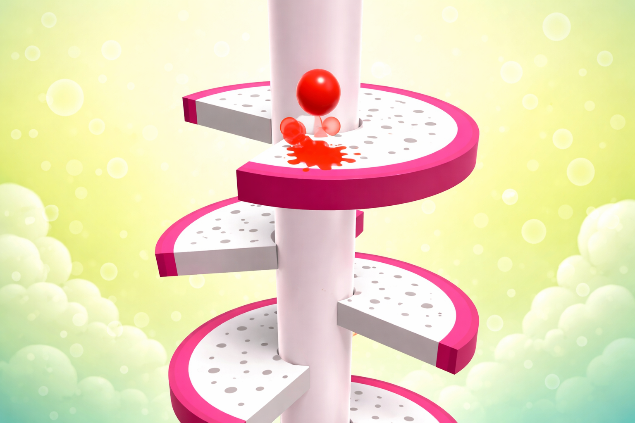
One-touch games succeed on phones for a deeper reason than “they are easy.” Their control model lines up with the physical reality of mobile use. People play with one thumb, one hand, partial attention, and short bursts of time. A one-touch game accepts those constraints instead of pretending the phone is a different kind of device.
That design honesty is what makes the format durable. It turns the limitations of mobile into strengths.
One-touch design reduces decision overhead
Complex control schemes create mental overhead before the challenge even begins. One-touch games strip that away. The player is not asking what to press. They are asking when to press it. That shift is important because it moves the difficulty from memorization into timing, rhythm, and judgment.
As a result, the player reaches the core mechanic faster, which is exactly what good mobile design should do.
Ergonomics matter more than people admit
Phones are often used while standing, walking slowly, waiting, or holding something else. One-touch games feel better in those conditions because the hand position is simple and stable. A single repeated gesture is easier to execute consistently than a more elaborate control pattern.
This ergonomic fit is a huge advantage. It makes the game feel natural in everyday use, not just during ideal play sessions.
One input can still create meaningful depth
The best one-touch games are not shallow. They build depth by changing timing windows, spatial relationships, pace, and consequences. The action stays simple, but mastery becomes precise. That is why one-touch arcade games can stay replayable long after the control scheme is fully understood.
In a strong design, simplicity in input creates clarity in learning. Players can feel exactly where improvement comes from.
Want quick one-touch style challenges?
Off Grid Games brings together fast arcade experiences built around simple controls, readable mechanics, and repeatable short-session play.
They are ideal for fragmented attention
One-touch games also survive interruption well. Because the control model is so compact, players can recover context quickly. That matters on phones, where notifications, real-world movement, and brief stop points are normal parts of use. A smaller input vocabulary makes the game more resilient.
Resilience is one reason the format works in waiting rooms, short breaks, and other unpredictable moments.
Why the format keeps producing strong arcade games
One-touch design forces discipline. It asks designers to make one action genuinely interesting. That often leads to cleaner mechanics, better feedback, and tighter pacing. When there is only one main action, every detail around it has to matter. That pressure can produce elegant results.
So one-touch games work well not because they do less, but because they concentrate more of the design effort into a single readable interaction.